My Experience with Masking
I didn’t realize I was masking until my therapist gently pointed it out. It started with questions: “How do you feel about eye contact?”, “Have you found yourself mimicking others lately?”, “Do you downplay your interests to avoid judgment?”
The one that hit hardest? She asked how long I had rehearsed my responses before the session.
That moment cracked something open.
By the end of the session, I felt drained. Not because therapy is hard (although it can be), but because I realized I had been performing a version of myself to fit in, even in a safe space.
When I got home, I felt relief. And with each session, I moved closer to unmasking and embracing my neurodivergent self. Finding support groups and online communities helped me see that I wasn’t alone. And honestly? I’m never going back.
What is Masking?
Masking is when neurodivergent individuals suppress or hide traits that might be seen as “different” to blend in socially. It’s common in autistic and ADHD people, especially those assigned female at birth, though many men and nonbinary folks mask too, especially in professional spaces.
Masking looks different for everyone, but here are some ways it can show up:
Social Masking Behaviors
- Forcing eye contact despite discomfort
- Mimicking others’ speech, tone, or behavior to blend in
- Rehearsing jokes, phrases, or full conversations in advance
- Hiding special interests that might seem “childish” or “weird”
Behavioral Masking
- Hiding stims like fidgeting, tapping, or hand movements
- Suppressing reactions to sensory discomfort (e.g., flinching at touch)
- Following strict routines to avoid unplanned social interactions
- Always arriving early to avoid negative judgment about lateness
Emotional Masking
- Feeling like a completely different person in public vs. at home
- Avoiding social outings to prevent burnout
- Feeling drained after socializing … even if it went “well”
- Losing touch with your identity after extended periods of masking
Why Masking is So Exhausting
Masking requires constant self-monitoring – how you’re sitting, what you’re saying, how your tone sounds, what your face is doing. That mental load adds up fast.
Many of us mask because we were bullied or misunderstood growing up. We learned to suppress our natural behaviors to be accepted. But that suppression comes at a cost:
- Emotional exhaustion
- Feeling invisible in group settings
- Anxiety around being “found out”
- Burnout that hits like a truck after social events
You might seem perfectly fine at a party, then struggle to get out of bed the next day. That’s the hidden cost of masking.
Long-Term Effects of Chronic Masking
Over time, masking can lead to:
- Chronic fatigue and burnout
- Identity loss or confusion
- Increased anxiety and depression
- Withdrawal from relationships, hobbies, or responsibilities
- Physical symptoms like digestive issues, headaches, or chronic pain
It’s a slow spiral that can impact every area of life, and it often goes unnoticed by those around us.
How to Start Unmasking (Gently)
Unmasking isn’t about being loud or dramatic. It’s about coming home to yourself.
Here’s what helped me:
- Letting go of friendships that felt draining
- Finding support groups where I could be real
- Exploring my interests openly, even if they seemed “childish”
- Setting boundaries around social events and overstimulation
- Being honest about my sensory and emotional needs
- Surrounding myself with people who didn’t need an explanation
I still mask sometimes, we all do. But now, it’s no longer my default.
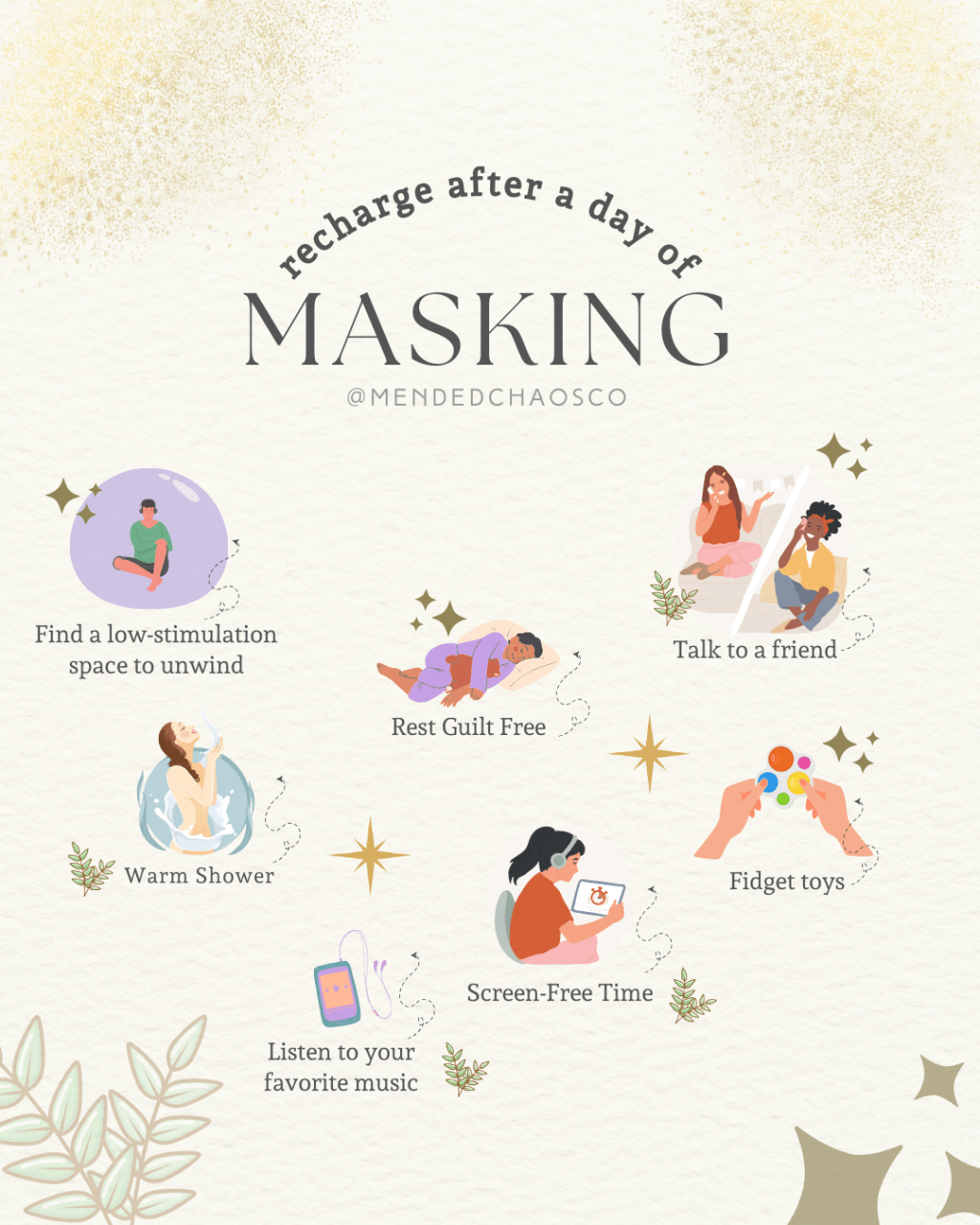
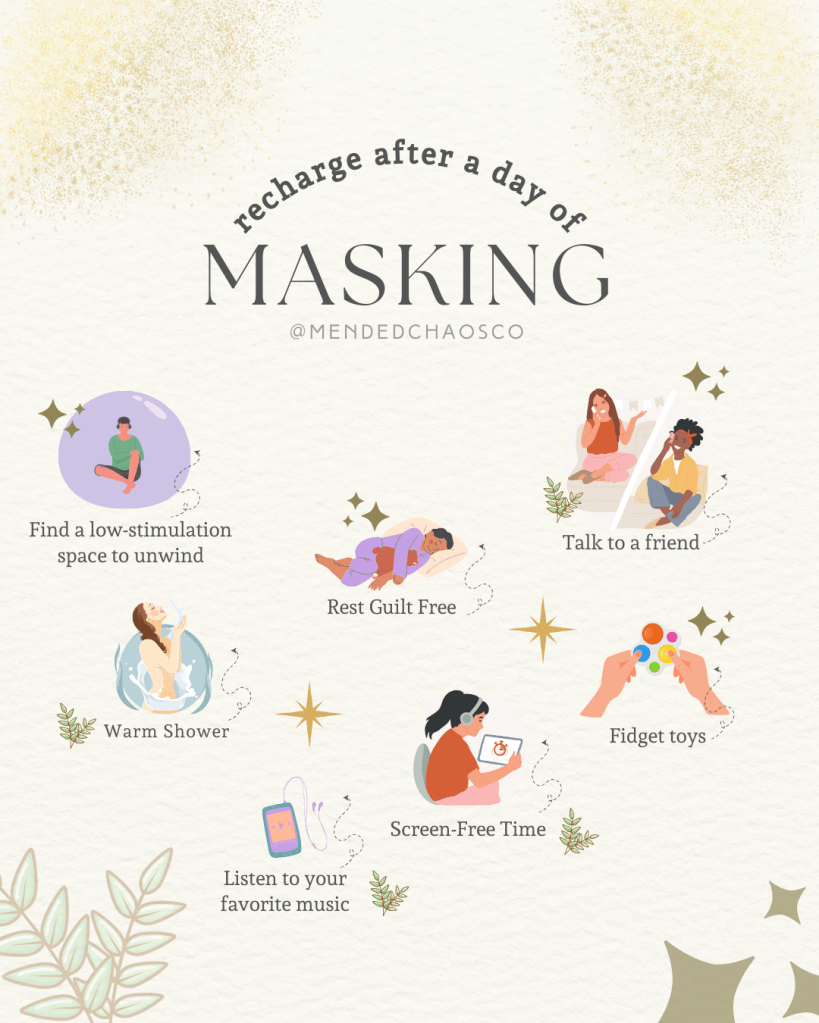
Need Help Recharging After Masking?
I created a free printable checklist to help you recover after those draining, masked-up moments. Whether you’re returning from a social event, work meeting, or just a tough day pretending to be “fine,” this list is for you.
Download your free “Recharge After Masking” checklist below.
You deserve to rest. You deserve to be real. You deserve to be seen.




 Mended Chaos Co
Leave a comment